Antigua and Barbuda, W.I.

BEYOND, Birds, Carribean, Travel
the ever curious Bullfinch

When I first started planning a December trip back 8 months ago or so, I had hoped to visit Central America.  I decided that was not a trip I’d feel comfortable doing alone and put the feelers out for someone to join me but in the end realized I’d be travelling solo and revised my plans.  Costa Rica or Columbia will have to wait, and Turkey is next on my list so it will not be soon if ever, but the universe decides at times.

My trip research became focused on closer, safer areas to visit that might have rain forest and excellent swimming, and the Caribbean started looking like a better possibility for me.

I’d never heard of Antigua and Barbuda, and their rainforest is basically non-existent at this point, but it is a safe, English speaking, area with ridiculously beautiful beaches and no shark problems.  The girl who loves to swim in the ocean was intrigued!  I had looked at some other Caribbean destinations as well but the solo travel safety factor, and the Magnificent Frigatebird Colony, urged me to book my flights to Antigua in the end.

I was a little concerned initially that the Frigatebirds were not going to be around because of Hurricane Irma in 2017 but discovered most of them had returned due to volunteer efforts to restore their habitat.

The people of Barbuda have not been so fortunate.  I’m glad that my research led me to take the day trip and tour of Barbuda with the Barbuda Express.  It was eye opening for sure. 

The part of visiting the Caribbean that most people don’t think about is that the history of the Caribbean is slavery and plantations.  That was only a short 200 or so years ago and the effects linger in varying degrees throughout the islands. Sobering to think of indeed and we must never repeat this.

In the case of Barbuda, a large part of their reparations are in the form of the land ownership structure.  “People in Barbuda own the land collectively. Any citizen over 18 years old has the right to occupy residential land, graze animals and use land for commercial purposes, as long as projects are not considered major developments. ” from Wikipedia – Barbuda Land Acts of 2007

This has all been recently disrupted, and Robert De Niro is at the center of the controversy.

From YouTube watch : De Niro’s Barbudan Land Grab

There is not a lot I can do other than sympathize with the cause, but I am glad I supported local people and local services and learned more about this in person.

I have no opinion one way or another about Robert De Niro (of course I love his movies and consider him to be one of the best actors of our time), but I will say I believe his security people thought I might be a Paparazzi as I pointed my large telephoto lens and binoculars into the bushes to photograph this Barbuda Warbler.

Barbuda Warbler near the gate to Princess Diana Beach

In fact, a lot of rich natural habitat surrounds the Princess Diana Beach area and is part of the land he has purchased, and it is all worth protecting and development would be unfortunate. In addition to the habitat on land, there is the nearby Mangrove stand in the lagoon which houses the 2nd largest colony of Magnicent Frigatebirds in the world, and a healthy corral reef surrounds the island of Barbuda.  There is pink corral sand in Codrington Lagoon in fact.

It would be wonderful if for once humans left a bit of habitat unspoiled.  If you read this Mr. De Niro I hope you understand the importance of this and work with conservation groups and local people to preserve the habitat.  I’m sure anyone visiting for at least 2 weeks would enjoy the natural beauty too. 

Everything doesn’t have to be about money and development.

I will say that the foreign aid that was designated for the people of Barbuda certainly does not seem to have reached them.

Instead of large development on the island, I think small businesses owned and operated by local Barbudan people would be more charming and in keeping with the landscape. 

Perhaps Robert De Niro can enjoy his property on the end of the island as a retreat and soak in the natural beauty and share it with friends. Would be a great place for Kayaking and other slowed down activities.

I am sure this could all happen with some cooperation and vision of keeping the island pristine from large development.

A small corner of the world largely untouched I hope it stays that way as there is so little left.

Codrington Lagoon – on the other side of this strip is the 2nd largest breeding colony for Magnificent Frigatebirds in the world
Magnificent Frigatebirds in Codrington Lagoon – these are males in breeding plumage – they are also the national bird of Antigua
the “birdy” side of Codrington Lagoon and the air filled with the national birds of Antigua in their sanctuary
Princess Diana Beach near the old K Club property that was purchased after the Hurricane Irma disaster

Anyway, the rest of my vacation was on the larger island of Antigua.

As promised the people were friendly, and there is nowhere on the island that is not safe to visit.  I don’t want to focus entirely on the politics, but you can bet that the history of Antigua and their courageous battle to form their own government and protect their people has a lot to do with the hospitality of the island.

Many places in the Caribbean are not safe for tourists to leave the resorts and plain and simple that is because the local peoples are still being unfairly exploited.  Poverty and adversity do very little to create happy people.

That is not the reason I’m not the type of person to visit a resort, but it does make me happy that I did not spend my money in a resort.  Foreign enterprise largely removes the money from a local economy to my understanding. 

If you can do it, it is far better for the local people of any area to shop local and stay in local accommodations.  I did this largely due to finances as I also certainly cannot afford an all-inclusive resort, but I will tell you that I still had a million-dollar experience.

Any food I ate on the island cooked by locals was wonderful (except I don’t like Choba it turns out, so pepper pot was a flop with me…LOL) and the prices were great.  Mostly I ate chicken rice and veggies but if you are a seafood lover the Conch and Lobster are great choices.

yummy home cooked food at a little hole in the wall heavily frequented by locals at the corner of Hawksbill Road and I believe Gray’s Farm Road – you can’t find this place on map and I can’t remember the name of it but it is very close on foot to the Five Islands Moravian Church

My host Marco, and later my local taxi driver and new friend Omar took me to the grocery store so I wouldn’t have to travel too far.  I stayed very close to Five Islands Village which is quite remote if you are staying off resort.

so you just know I told Omar he has to watch the Wire….LOL – thanks for all the local knowledge and safe travels Omar I wish you much happiness in your life!

I opted not to rent a car as driving in Antigua is not for the faint of heart.  A drive through downtown St. John’s is stressful and tough to navigate for anyone not local.  So instead I laid low, rested, went swimming, and arranged a taxi for anywhere I needed to go. Of course I did get a taxi into downtown St. John’s to pickup some Susie’s Hot Sauce for my Dad. Yup, it’s HOT!

I was also super fortunate as Five Islands and Galley Bay area has some of the best bird habitat on the island and so I was surrounded by birds at my accommodations.

Right on the property I had the following list of birds:

(Note as of December 12th – I will add more bird photos later still processing them all!)

  • Black- crowned Night Heron
  • Caribbean Martins (who were exhibiting nocturnal behavior and confused with bats by the locals…I saw them clearly and I will assure you there were birds)
  • Scaly-breasted Munia
  • White-crowned Pigeon
  • Common Ground Dove
  • Zenaida Dove
  • Bananaquit
  • Black-faced Grassquit
  • Antillean Crested Hummingbird
  • Caribbean Elaenia
  • Gray Kingbird
  • Lesser Antillean Bullfinch
  • Carib Grackle
  • Brown Pelican
male Antillean Crested Hummingbird – the female is actually more striking which is not the norm with most bird species – I believe it implies they are faithful mates
there was a family of Antillean Crested Hummingbirds just outside Spice cottage so I got to see them feeding this young one while having my morning coffee
Omar had asked me if I knew what the birds with red eyes that stared down from the trees on the hills were and I was stumped until later when I was sitting on the deck and got this creepy feeling – juvenile Black-crowned Night Heron pretty much harmless but certainly looks menacing!
Brown Pelican very common bird in Antigua
another bird I photographed while having my morning coffee – Caribbean Elaenia which is a type of Tyrannida Flycatcher
so the reason I was awake early most morning was the noisy and very gregarious Gray Kingbirds insisted
the resident White-crowned Pigeons on the other hand were one of the shyest birds I have ever encountered

And within a short walk to Five Islands Village for lunch I found:

  • West Indian Whistling Ducks
  • Scaly-breasted Thrasher
  • Cattle Egret
  • Great Egret
  • Broad Winged Hawk

Because there were so many birds where I was staying I really didn’t have to do much other birding around the island to find target birds, but I did have a pretty great birding experience in the habitat across the street from Runaway Beach (a popular tourist area where Sandals and other resorts line the beach).  The area is an IBA named McKinnon’s Saltpond.  Here is my list.

https://ebird.org/checklist/S61898693

And after almost 2 hours of birding, yes I did take a 5 minute dip at Runaway Beach.  It would have been ideal to balance that better, but meh.

Runaway Beach

I did stay one night on the other end of the island near Seatons, but my accommodations did not live up to my expectations so after one night I returned to the Galley Bay area and the heavenly accommodations.

I was supposed to have a kayak tour in Seatons with Antigua Paddles but the swells were very bad and it was cancelled.  I was really sad about that because the owners had been wonderful to deal with when I booked, and I heard many good things about them and really wanted to have an experience where I could go slowly and look through the clear waters to marine life without snorkeling but the sea was super rough and there was no way to reschedule before returning to Nova Scotia.

a new favorite corner of the world at Galley Bay Beach

It was not really even safe for swimming in Galley Bay as there were 3 series of large waves breaking you had to swim out quite far to avoid them and since I was alone, I decided to spend some time practicing wave photography instead.

no swimming for me this day! storm surge in the Caribbean Sea at Galley Bay Beach

My island guide Omar recommended that I take a Wadadli Cat day tour around the island as an alternative and it was a great way to spend my last full day in Antigua.

We did zoom by the Greater Bird Islands and Captain George called out the White-tailed Tropicbird for me and I pulled the camera out of the dry bag briefly and got a doc shot between waves. I spent the rest of the boat tour explaining about birds to the tourists of course.

what us birders call a “doc shot” of a White-tailed Tropicbird – thank you Captain George!

With the birding accomplished, when we docked for a couple of hours at Green Island, I decided that floating on my back in the Caribbean Sea while drinking several Rum Punches was exactly what I needed to be doing.  How I held onto my camera gear later when disembarking down the steps into the ocean is a miracle for sure!

Yeah mon! Swimming and Rum Punch in Green Island Bay

I was in Antigua and Barbuda, W.I. for a week by myself and I was often alone, but never lonely.

many Anoles kept me company on my visit to Antigua
one of the animals I had most hoped to see in Antigua was the Mongoose – there were two on the property where I was staying and although they were extremely shy I caught this one at sunrise one morning while drinking my coffee

I’m super upset that Parks Canada killed most of the Moose population of the Cape Breton Highlands National Park over the past 4 years

BEYOND

Oh boy I have a lot to say about this mess and will be writing this over the next few rainy days and I know it’s a complete rant and I plan to edit it when I simmer down as well but trying to get some points in writing before I forget. Not looking to win a literary contest.

Primarily I do not accept killing, culls, hunting, harvesting or anything that involves the intentional death of animals in our National Parks. Who is responsible for this mess? Grrrrrrrrr! It’s Federal, and the Liberals are talking about how much land they conserved over a 4 year period so was this part of that? Because sounds like horsepucky to me and I will be voting for whomever is totally against culls in our National Parks, you can be sure of that.

I’m not some city slicker who doesn’t understand wildlife.  All my life I’ve been in the woods.  Our subdivision in Cape Breton backed on a large greenbelt and I spent many hours walking and cross-country skiing as a child, often alone. There were always snowshoe hare, coyotes, deer, snares, and hunters in our woods, so I learned about all of that at a pretty early age.

We also spent many weeks each summer camping in Ingonish and encountered Bobcat, Moose, and Black Bears (under supervision and with lessons). 

Over the years I’ve encountered many moose on the road on fall drives through the highlands and seen young ones and mothers in the spring.

I regularly back country camp and learned to build a lean to shelter at camp as a schoolgirl. 

Additionally, I have been involved with varying dog and cat rescue groups over the past 20 years or so, so have a great deal of knowledge of the effects of killing as a solution.

I believe I have earned the right to speak on this subject.

Anyway, I visited the Cape Breton Highlands last week on a 4 night overnight trip which I specifically booked in order to photograph Moose, and hopefully some other wildlife. It never occurred to me for a minute that it would be difficult to find Moose during the rut in the highlands but in 4 days combing many trails by foot and lots of driving around and getting up at the crack of dawn only netted one brief sighting on the road, one pile of moose poop, and one set of tracks. So maybe there is only one Moose left in the CB Highlands?

To start, I would like a full refund for my Parks Canada pass for the 4 days because I do not want any of my voluntary dollars going to this “boondoggle”, as someone else has labelled it so well. It would seem my tax dollars have already been misappropriated the way I see it. I believe this is a politically motivated violation of department monies, that mixes issues and crosses department lines that should never be crossed.

Until I get a chance to write more here are a few links:

https://www.capebretonpost.com/opinion/local-perspectives/letter-to-the-editor-moose-cull-a-boondoggle-252241/

Anyway…lots more to come on this topic!

For starters, what a betrayal of the animals trust. They have always accepted human presence and been non-aggressive and shared their space because they lived in a kill free zone in the National Park. Can’t the animals have one safe space in Canada? They did for years what has changed? I’m beyond upset. Unacceptable.

As a form of population control, culls have proved ineffective as a long-term strategy. The more humane solution with proven lasting effects in reducing animal populations is always TNR (trap, neuter, release).  I’m sure for the cost of $7900 per moose they could have flown in veterinarians to neuter male moose in the field instead of spending it to kill them. 

Talk about a real waste of taxpayers money, the feds killed the moose, and the province wants to conduct a study to see why there is a population decline. The government must think it’s like taking candy from a baby because nobody seems to be fighting this.

https://www.cbc.ca/news/canada/nova-scotia/n-s-federation-of-hunters-worried-about-cape-breton-moose-1.5174308?fbclid=IwAR37HuQ80W6fW4NzxNSmNlRVa2heaADw_8mQhRX60VFzAvk277ijxrkWf9A

Absolutely there should be no child poverty in First Nations.  My question is why is it taking a moose cull on National Park land to combat child poverty?  Have we just ignored this issue completely until 4 years ago when Parks Canada decided to start culling moose in Cape Breton?  What are they doing in the rest of Canada to combat child poverty in First Nations?  You can’t feed every child in Canada with 100 moose shot in Cape Breton.  We need a real plan so no child ever goes hungry in our country.

https://www.cbc.ca/news/canada/nova-scotia/moose-cull-parks-canada-cape-breton-highlands-national-park-1.4897354

Child poverty, and poverty in First Nations communities should simply be addressed in our nation and every child and adult in this country should have food to eat, and clean water to drink.  Period.  Parks Canada is not the department to deal with this matter, and that is why I think this a politically motivated misappropriation of department funds.  More than anything the people that benefited financially were people paid to fly helicopters and rack up overtime, and I’m certain the money could have been spent better.

Further to that, if the cost if $7900 per moose killed  to the tune of about a million bucks and that is what we are proposing as a way to combat “food insecurity” I would say approximate 208 families a year could simply have been given food for a year in Cape Breton for the same price ($400 a week x 12).

This makes no sense to me.

I was personally embarrassed and appalled that the Potlotek First Nation was left without clean water to drink for many years.  You can not treat Canadian children or adults this way.  We are one of the richest nations on the planet and we should not have any of our citizens go without clean drinking water. 

Anyway, the moose really don’t know if they are allowed to leave and enter the park at their will, but I expect they do and they are hunted outside the park boundaries so that should provide “population control” if deemed necessary and bag limits are set each year. 

But you don’t kill animals in our National Parks in Canada.  Not on my watch.  I am appalled that it seems to have become acceptable to do this, and that so many Canadians are complacent about this issue.

The government seems to decide what they want to cull and change their minds on a fairly regular basis in Canada. Messing with ecosystems is what humans seem to do best. In Newfoundland, they culled all the Wolves some number of years ago. Now they have an abundance of Moose which should not come as any surprise. And now, when I visit Newfoundland I’m told by the locals the Wolves are coming back. I’m sure we will need a bunch of surveys and government interference to find out what they already know…the Wolves are coming back.

Then the cycle will start all over again.

Out west, they are killing Wolves to save Caribou. Again, I completely disagree that culls save anything. Nature balances itself as they discovered in Yellowstone.

The introduction or destruction of herds and predators by humans is completely inappropriate in my opinion. The forest is a place where animals live. We cut down most of the habitat in the world at this point so they should have some left for themselves. And Mother Nature knows how to manage her wild territories, we don’t need to get involved. When we as humans enter the wild spaces, we need to know how to conduct ourselves. This means not taking selfies with animals. Not feeding wild animals. Leaving no trace when we hike and camp. Being aware of our surroundings and prepared for encounters with wild animals, and studying the behavior of expected wildlife before heading out into the wild.

That being said, the animals in our National Parks have typically been protected from hunting and being killed so have become tolerant of being exposed to humans and for the most part are non-aggressive (which for the most part they are anyway although I wouldn’t want to encounter a Polar Bear) so I maintain that is a complete betrayal of their trust to organize killing parties in national park. You can call it a “harvest” if you like but to me that also opens up the National Parks to logging. Slippery slope that I’m not interested in going down.

To protect the Boreal Forest, first understand that not all of it is located in National Parks. So once again you may want to envision what a million dollars may have been used for in Canada to preserve Boreal Forest. I’m sure killing some moose in Cape Breton was the least useful thing you could spend that money on.

Clear-cutting is a huge contributor to the destruction of habitat. The petroleum industry and fossil fuels are a huge detriment to the health of our planet. If the moose are eating a few trees, it pales in comparison to what humans do every time they buy a bottle of water, or take a drive, or the majority of what we take for granted is this very carbon heavy country we live in.

So yes please oh government of Canada, please find something more useful to do with 2.1 million dollars to protect habitat and feed people than killing moose in a National Park.

I will be doing more research and also plant to reach out to Rose Courage and others in the area. I am most surprised that most people in Cape Breton that I know, including people who live near the highlands, have little knowledge of this issue. Hmmmmm….what are the politicians telling people? The press releases from Ottawa appear pretty condescending and slanted in my opinion.

https://www.thechronicleherald.ca/opinion/rose-courage-no-valid-reason-for-moose-cull-in-cape-breton-highlands-national-park-306507/

https://www.capebretonpost.com/opinion/local-perspectives/op-ed-options-to-moose-cull-should-be-considered-297960/

Hurricane Dorian bird fallout in Eastern Passage, NS

Atlantic Canada, BEYOND, Birds, Canada
Black Skimmers at Rainbow Haven Beach – September 30th, 2019

During a harsh winter over 4 years ago I became a “birder” when I saw in the news there was a mega rare bird, a Eurasian Kestrel, hanging around Hartlen Point.  Our Eastern Passage streets were packed with ice and I couldn’t venture too far so I thought it was worth popping down to see what all the excitement was about.  The birding community immediately welcomed me in, and life has never been the same.

After viewing many rare birds here in Eastern Passage since that day, I now fully realize how lucky I am to live next to one of the best migratory points in the province, and in fact one of the best in Canada.  In good weather and bad, and in all seasons but especially in the fall, Hartlen Point is the envy of many birding enthusiasts across the country.

On the evening of September 7th, Hurricane Dorian made first landfall in Eastern Passage, and many thousands of birds that had been trapped in the eye of the storm hit the Eastern Shore and later Cape Breton after flying for days exhausted and hungry.

Had I been better prepared I would have gone out that evening in the eye of the storm, but I really didn’t realize how spectacular that would be as a birder.  Right after the eye passed over our house, a rare bird report came through my email from Diane LeBlanc (VP of the Nova Scotia Bird Society) who had documented the event from the other side of the harbour from her home in Portuguese Cove.  Through her birding scope she watched large numbers of Black Skimmers, Swallows, Swifts, Shorebirds, and Terns flying over the ocean during the eye.  After reading Diane’s summary I promptly set my alarm to get up early and head for the shore here in Eastern Passage.

Many of the best birders in our province had the same idea and groups of them congregated from sunup to sundown in Eastern Passage along the shore over the following days.

For most of us this this was exciting, wondrous, and tragic all at once.  Many of the birds who were swept away by Dorian from the Caribbean through the Carolinas suffered greatly and many surely died at sea.  Many died upon landing or perished over the next 24 hours.  Many Laughing Gulls were hit by cars as they stood in the roads confused, tired and looking for warmth from the pavement.

As it always happens, the strongest survive, and over the next days and weeks the birds rested, ate, and many made their way back down the coast.  As I write this 5 weeks later this Thanksgiving weekend, there are still a group of about 40 Black Skimmers lingering at Rainbow Haven Beach in the fantastic Salt Marsh habitat, but hopefully they will find their way back down South as the temperatures drop.  Their numbers have been dropping gradually and at the height of it there were approximately 200 Black Skimmers in the area between Rainbow Haven and the Salt Marsh Trail.

Members of the Nova Scotia Bird Society are always welcome at the Hartlen Point Golf Course if we are respectful and stay out of the golfers’ way, and the local mecca of birding at this time of the year is Jimmy’s Lane.  It’s a spot that means very little to non-birders and is just a cart path down in the back bay.  Birders were very fortunate as the course was closed for 2 days after the hurricane, so we were able to walk through uninhibited.  For about a week, Jimmy’s Lane housed many Warblers that are very rare to Nova Scotia such as Cerulean Warblers, Worm-eating Warblers, and even an incredibly rare Swainson’s Warbler.

this Cerulean Warbler is the 300th bird species I’ve seen in Nova Scotia, so it may not be a wonderful photo, but I was over the moon to see it! The simply amazing wood carver Jim Edsall is working on a carving for me to commemorate my birdie milestone

The local beaches were graced with many Tern species which are quite rare to Nova Scotia, such as the Forster’s Terns which hung around the Eastern Shore for some time before picking their way down through Yarmouth on their long journey back home to southern waters.

Perhaps none of this sounds very exciting to the average person, but I know many people in our community have enjoyed watching the Black Skimmers and Laughing Gulls at MacCormack’s Beach.  Wonderful little tourists to our seaside community.

got this snap in front of Boondocks Restaurant the morning after Hurricane Dorian of some human tourists with a Black Skimmer tourist

In the days following the storm I had the opportunity to chat with both birders and non- birders on the boardwalk, and the most interesting thing I heard was actually from a non-birder who said she watched hundreds of birds land on the shore through her window in her home on shore road as the eye of the hurricane passed over us.  She didn’t know what most of the birds were, but she was awed all the same. 

For me this was a truly amazing experience and I was able to see 11 new to me rare species of birds during the next week.  We were very fortunate to have warm weather and not too much damage in our community.  We are all better prepared for future major weather events, but us birders will be extra ready!

Nova Scotia Bird Society meeting and field trips in Yarmouth – summer solstice weekend 2019

Atlantic Canada, BEYOND, Birds, Canada

My 2019 summer solstice was spent in Yarmouth for the Nova Scotia Bird Society annual out of town meeting and field trips.

Honestly the annual out of town field trips are the best part of the NSBS for me, and likely many others feel the same.  It’s only the second one I’ve attended, the first being the fabulous weekend in the Cape Breton Highlands last year.

I’ve been to Yarmouth many times but never for a pleasure trip, so it was wonderful to spend some time in the beautiful Acadian region at the most southerly tip of our province.  I found an Airbnb right on the water on the Pembroke Road, which also turned out to be in a bit of a birding hotspot near the Goose Flats/Cranberry Head. 

the view from my room in Cranberry Head

It wasn’t a weekend about rare birds, but of connecting with rare birders.  There are only a small number of very good birders in the province, and a good percentage of them attend these events.

On the topic of rare birders, we had one join us all the way from British Columbia.  Suzy Wright found out about the event when visiting Nova Scotia and incorporated it into her trip.  It was interesting to have her observations as part of our group to include a perspective from our other coast.

left to right – Maurice LeBlanc, Angie Millard, Suzy Wright, Tony Millard, B Haley

We had wonderful weather and a good number of nesting warblers and songbirds.

Black-throated Green Warbler singing his most musical of warbler songs

The highlight of the trip for me and many others was the boat trip.

Alix d’Entremont sharing his vast knowledge of the local waters and islands

We all enjoyed sunny mornings and were often greeted by White-tailed Deer.

early morning greeter at Cape Forchu

There was a photography workshop by Simon d’Entremont, which I do regret not attending as I love his work.

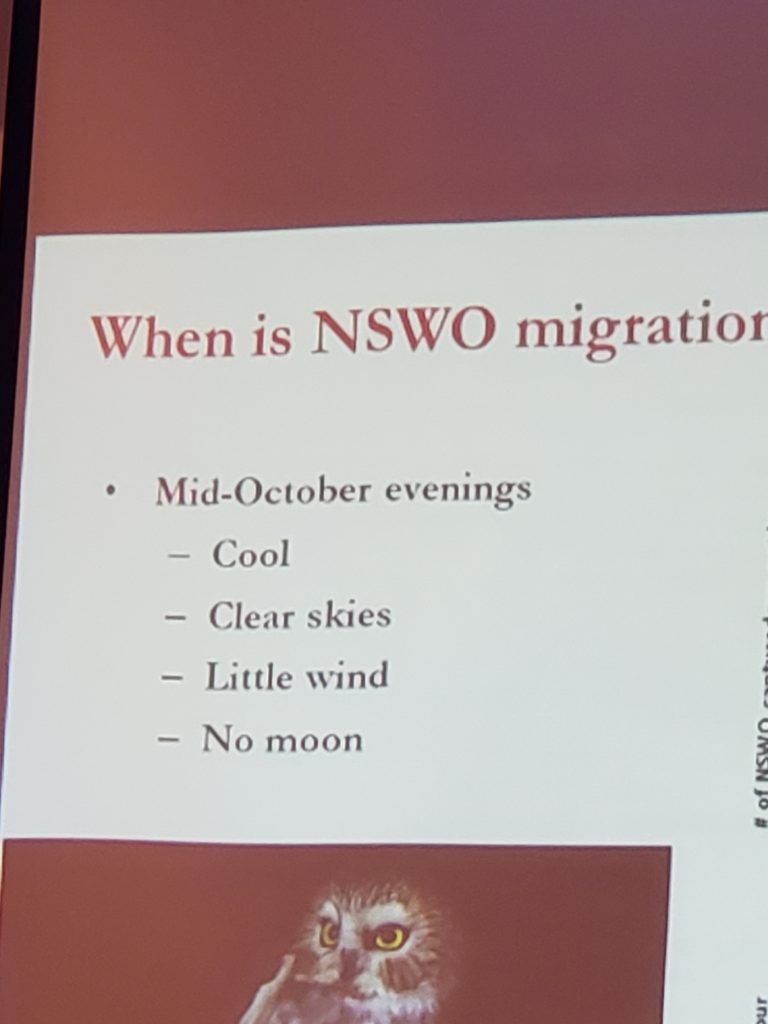
The talk on Northern Saw Whet Owls at the museum was very interesting and I’m tempted to head up to NB to see if I can assist with banding in October!

It was great to meet some of the local birders who don’t make it into Halifax for our meetings. Eric Ruff was a wealth of local birding knowledge in particular and kind and generous enough to share.

All in it was a wonderful kickoff to summer with lots of learning opportunities and great company. I even met my first Raven babies!

these young Ravens were hopping around noisily harassing their parents for food – their parents have skulked off quietly for a mental break at this point…haha

Aversive Alternatives for my Border Collie mix

Barks, BEYOND

When I adopted my Border Collie mix, Macy, about 2 1/2 years ago I quickly realized things weren’t quite right with her. She is very triggered by movement and sounds and doesn’t have a great sense of smell, and potentially not a full range of vision. Some of this I have only recently learned by attending another round of Agility classes and sharing my difficulties in training her with the course instructor.

People employ a wide range of cruel and unusual techniques it would seem to solve somewhat simple problems. Border Collies are bred for their eyesight and herding instinct. Poorly bred dogs can suffer from undesirable neurological traits. Or, a dog like Macy who should be breeding sheep as she was somewhat bred too, has difficulty being a house dog. Not that complicated IMHO.

So Macy is prone to barking and lunging at object that pass by windows in the car or house and even though I have employed a variety of force-free techniques I have to finally admit I’m not winning the battle to any degree. I had a few small wins on this front I can build on over her lifetime but I need to let the rest of it go.

It wasn’t very long after we got Macy that we discovered her problem with shiny spots on the wall and the ceiling. She will climb up furniture and break things to get to them. It’s quite a problem. She really thinks they are birds or something that have gotten into the house and wants to chase them. And there is simply nothing to be done about that. It will never improve. I did a fair bit of reading on it and was really upset because the indication was that she needed a sensory free room to have time outs in, combined with medication, and if no improvement then euthanize her. As is my nature, I do not accept things that are unacceptable so I thunk and thunk until my thinker hurt, and came up with an incredibly simply solution…curtains. They were expensive to find a size and suitable style for my taste on my budget, but now as soon as the sun hits the problem threshold and makes the taps or glasses create those scary shiny things on the wall and ceiling, we just close the curtains for a few hours.

Whew.

curtains for Macy turned out to be a good thing!
we can keep the shiny monsters now!

Our next step was to cover the dreaded floor to ceiling window by the front door in some translucent window cling. Previously she laid at the top of the stairs barking at everything that walked by, and now no problem and the light still comes in.

translucent window cling

Finally I have just as of this week accepted that I’m not going to win the picture window battle. We put up some curtains halfway up the window last night, and it’s our first bark free day in 2 years. Lovely!

we can lower this about a foot, but a half curtain still lets the light in and she can’t see dogs and people walking by
even sitting on the couch she can’t see out – she is probably wondering what happened to her television…LOL
the princess is happy…both of us! I don’t think she enjoys acting crazy and will feel calmer over time for not practicing bad behavior and being triggered

Will probably find someone with a sewing machine to shorten them up and drop them down a foot or so (very hard to find curtains shorter than 54″) so my plants will be happier, but this is going to be amazing as a humane solution / aversive-alternative.

As for the barking in the car, I can somewhat live with it with Macy as a solo companion, but if we introduce a second dog down the road, they will simply have to be crated in the car. No way around it.

It’s a bit like the serenity prayer – accept the things I cannot change, the courage to change the things I can, and the wisdom to know the difference.

I see no point in trying to force a square peg into a round hole here, and refuse to do anything cruel or unwarranted.

I love my Macy and hope this helps a dog you know and love to deal with some of these issues. We ask a lot having working breeds live in cities and subdivisions, we have to give a little understanding in return.

These may not have been my first decorating choices, but it’s a give and take to share your home with a living creature.