the grainiest bird photo I was ever so happy to take

BEYOND, Birds, British Columbia

Earlier this month I spent a bit of time birding in British Columbia in advance of a short work conference in Vancouver.  In my tradition of not straying too far from the city for my diversions, I chose Squamish as the out of town overnight.

Last year my epic lifer fail was on the Barn Owls, so I was determined to get them this year and got some help from a guide (Mike Klotz) to up my odds and added American Dipper to the wish list.

As much as I love to see rarities, my preference is to see native species in their natural habitat.  Both the Barn Owl and America Dipper are endemic species for the West Coast and would not be seen in Nova Scotia.

After arriving in Vancouver, I took a bus up to Squamish to spend the night.  Beautiful setting to spend a bit of time and unwind, and great Dipper country.  I noted a little park across from the Squamish bus stop so did a bit of birding, luggage in tow, and got some great looks at a group of Varied Thrush.  They have evaded me on previous trips to BC, so I was happy with this serendipitous sighting.

Varied Thrush male
Varied Thrush female

The next morning I arranged for Mike meet me in Squamish at sun up, and we checked a few fast-moving streams where Dippers are known to be present.  We dipped on the first one (I know) and I spotted one right away at the second location.

Dippers are a little hard to photograph as they are small, dark, and favor mountain streams.  Even if it’s sunny out, the mountains cast a shadow and creates a dimly lit environment.  However, I’m relatively happy with my photos, but more importantly I was thrilled with the experience.  The first bird we found sang beautifully for a while, which was an unexpected treat so early in February.  

The second bird we saw in another location put on a great little show flying up and down the stream, stopping to forage for food.  When we zoomed in on some of our photos, we realized he was actually that some of what he was finding, and eating were Salmon fry. 

American Dipper eating Salmon Fry
American Dipper taking a rest to digest

The weather was perfect, so we enjoyed some casual birding on the trails in the lovely mountain setting. 

not a bad spot to wake up and do a bit of birding in I thought

Many of the birds are also native to Nova Scotia, although some have colour variants such at the Red-bellied Sapsucker (our is yellow) and the Northern Flicker (ours is yellow-shafted, BC has red-shafted).  Most of the Eagles had moved on but we saw a few.  December I believe would be the time to see the 1000+ strong convocations of Eagles following the Salmon run.  Someday if can find the time that would certainly be something to see in such a lovely setting.

We have large groups of Eagles in Nova Scotia, but sadly it’s because someone feeds them chicken carcasses to attract tourists.  Not my idea of watching birds in natural habitat.  Although we do get large groups in the fall at the Cape Breton causeway following the Billfish (Atlantic Saury) run which is fun because lots of other critters such as White-sided Dolphins enjoy that as well.  Still I don’t think we would ever see 1000+ Eagles all at once in Nova Scotia without a man-made circumstance of some sort.

Anyway, I only had two target birds for the day, so we were off to find my Barn Owl next.  Mike had a lead on a location in Point Roberts, Washington where we thought there would be enough light in the barn to get good photos, but the owls were not there.

However, it was supercool to do some sea birding on a little beach in Washington. “Point Bob” is basically the most southerly tip of BC that is cut off by the 49th parallel.  Birding never fails to bring me to interesting places, to provide different viewpoints of our world.

I even had an opportunity to do some birding in Washington!

Knowing how important it was to me to see my first Barn Owl, Mike had a backup location.  And a backup to his backup, which fortunately we didn’t have to use.

The barn was very dark, and the second story rafters were very high.  Even with binoculars it took a bit of work to locate two Barn Owls that were seated high in a corner.  After seeing then in my binoculars, I made a few feeble attempts to photograph them at ISO 1600 that I had set from the first location with more light, and immediately realized I’d have push the sensor to the max and settled on the full ISO 256000.  My grainy shot is still a great accomplishment by my budget priced Nikon SLR given the conditions, but even better it shows how amazing the Barn Owl camouflage is.

what amazing camouflage the Barn Owls have!

These wondrous creatures look they are part of the barn boards.  You can see other camouflage in this photo too that prove once again Mother Nature always has a few great tricks up her sleeve. And so is the story of the grainiest bird photo I was ever so happy to take.

The afternoon owl theme continued as we stopped at to visit some Great Horned Owls, and then went in search of a Northern Saw Whet Owl.
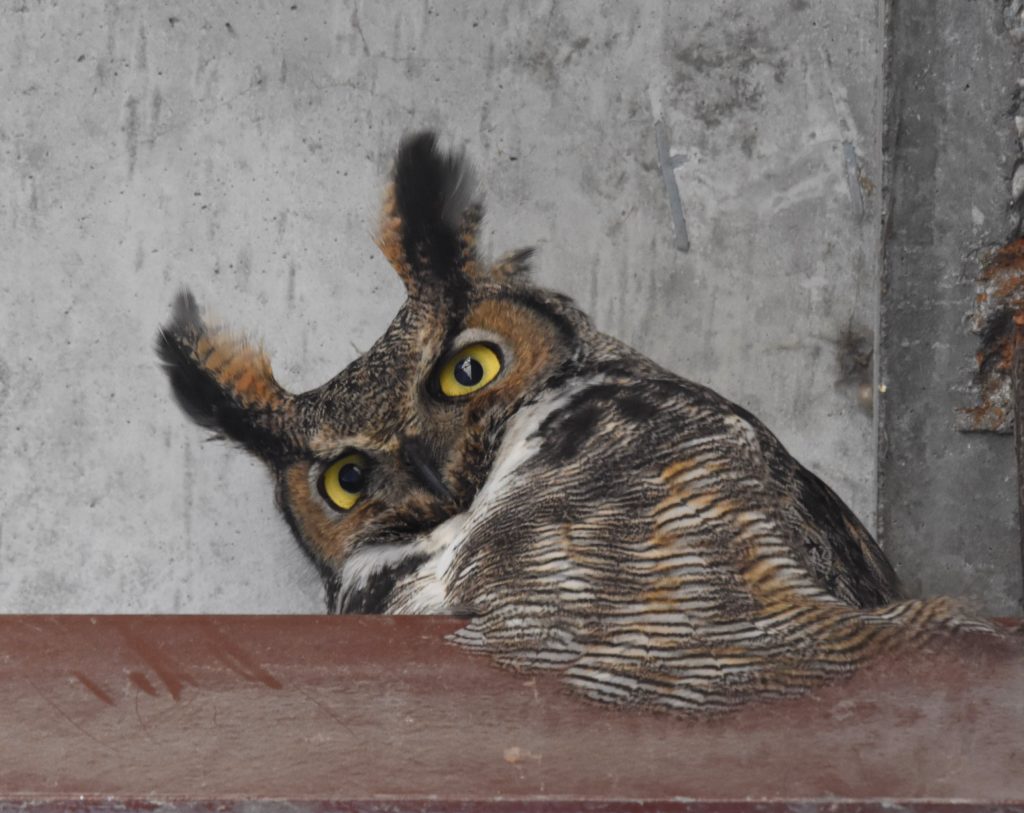
Great Horned Owl

The Saw Whet search was not so successful, but we had great fun trying at the Reifel Bird Sanctuary.

female Wood Duck Reifel Bird Sanctuary
one of the resident Sandhill Cranes at the Reifel Bird Sanctuary

As if that wasn’t good enough, we spotted a Short-eared Owl at dusk as we ended our day.

Short-eared Owls and me have quite a back story.
Short-eared Owl heading off to nab something I’d say

I had a great adventure and I’ve now seen most of the birds I’ve wanted to see in BC. My next British Columbia visit goal is to photograph a beautiful Coastal Wolf, but realistically I’ll probably just do wide angle shots in Gastown  ?

don’t sacrifice your dog’s precious temperament for the illusion of control

Barks, BEYOND

Without fail all of the dogs I meet with sketchy or nasty temperaments have been subjected to aversive training methods and/or devices. In fact just today a German Shepherd dog was reactive and nasty to my dog, Macy, for absolutely no reason at the off leash park and the first thing I noticed is that it was wearing a choke chain. German Shepherds have an undeserved reputation for being aggressive, but I can tell you first hand that we meet a good deal of lovely, friendly ones who have been raised in non-punitive environments. The quality of a dog’s temperament is extremely dependent upon what methods are used to train them.

Who wouldn’t be nasty and unpredictable if all of their guidance in life involved pain and/or fear. Just think about that. Typically I avoid any dog wearing a choke, prong, or electronic collar because I simply don’t trust them and don’t want them to hurt me or my dog. It can do damage to your own friendly dog’s temperament to interact with aggressive dogs so it is wise to be choosy about who your dog meets for sure. Anytime I’ve ignored that I’ve immediately regretted it and had months of remedial work to remind me of my error in judgement.

At some point some misguided person decided that the most important thing is for a dog to be a robot under complete control. Walk on a tight leash, don’t interact with anything, don’t sniff anything, don’t be happy and curious, don’t pull toward things that interest you. Be miserable and frightened of potential harsh repercussions all the time. But hey, the owner will feel important and powerful envisioning themselves as some kind of urban lion tamer. Well that just sucks. It’s way more important that your dog is well socialized and will come when it’s called off leash than if it can heel. You need to be certain that even if your dog is wearing no collar at all that it will listen to you. If you develop a good trust relationship with your dog and teach it what is expected and make learning fun, it will.

Your dog will be happier and friendlier when you loosen up your expectations of complete control and start putting a lot more value on a rock solid, friendly disposition.

Do not yell, grab, pin, shake, or hit your dog. Do not use pinch/prong, choke, or WORST ever electronic collars of any kind. They are banned in the UK and many other countries yet sadly Canada still hasn’t gotten on board. Do not get sucked in by slick marketing and rhetoric about positive training that actually refers to positive punishment. I can tell you right now, aside from scientific jargon designed to confuse you and dupe you out of your hard earned money, there is nothing positive about punishment. Discipline means to teach. Punishment is frankly gross and has no place in a civilized society. All of the tools that will hurt or frighten your dog are pure profit for trainers and stores who promote them. I promise you they exist for no other reason.

The absolute best way to train your dog is to reward good behavior when it happens. Especially if the dog does it without being asked or taught. Can you imagine if great food fell into your mouth from the sky when you did something by accident? Bet you’d do more of it.

The earlier you start this the better and if it’s later on to counteract bad behavior just stick with it and be patient. It will take more time but it’s way more effective than punishing your dog and yelling and getting angry. At best that makes dogs think you have no emotional control and are someone to ignore, or you are scary and untrustworthy.

Unlike children who may or may not want to please you depending on many factors, odds are your dog lives to please you. So harness that instead of being mean and cruel and angry with your best friend.

Anyway, the cost of control is high.

Too many dogs are angry and filled with anxiety these days. 

When you see an expression like the dreaded “whale eyes” on a dog then you should be able to clearly see that poor animal is in distress.

You can find a great description of what force-free training is here, and I think all my kindred spirits will agree it’s the only way to go.

Dogs have a tremendous repertoire of calming signals they use to appease other dogs, and harsh owners and methods. Animals have a basic instinct in stressful situations for fight or flight. Always keep this in the back or your mind that it takes discipline and experience to fight your animal nature, even if you are a dog.

The focus of all force-free trainers is to contribute to the well being and good temperament of dogs.

Furthermore, every force-free trainer and behaviourist I know works pro-bono with rescue groups all the time, but they don’t advertise it and use it to leverage sales as the shock jocks like to do.

A money back guarantee from a shock jock if the dog ends up euthanized really is not the same as a dog that is alive and friendly is it?  Although it rarely makes the headlines, there are many dogs who have been euthanized after being “rehabilitated” with electronic collars.  However, I do recall a recent news story where someone was killed by a dog who had been “treated” for aggression using an electronic collar.  Clearly it was not rehabilitated.  So sad, and so preventable.

” Now they were able to see and play with Blue prior to his adoption from Forever Home Rehabilitation Center and that he seemed like a good fit for the Pattersons. Blue showed no aggressive tendencies. It was when they brought him home and took off his shock collar that he attacked.”  (I’m sorry but 3 months of board and train with a shock collar are to blame I’d say – rescues like this are not helping anyone!)

Simply put some dogs have problems just like some people have problems and you can manage this in a variety of ways, but you cannot cure it.  They may have been bred poorly and have genetic temperament issues, or they may have suffered abuse and trauma that they are unable to overcome. If you force a dog into situations they can not handle, there is always the danger they will “blow up” and ignore any pain or repercussion and that can be much worse even then how they would have behaved had you not used harsh training methods. Very dangerous. Do not trust quick fixes from people who are getting rich quick because you didn’t do your homework or really think this out from the perspective of a living creature, who is most likely frightened and not “trying to be the boss”.

Please be humane in the management strategy you choose, please and don’t expect more than a dog can deliver.

I think we were put on this earth to make dog’s happy and protect them from harm. Some would not agree, but I don’t let them near my dog!

Macy at a Lietash agility class

my big fat Greek birding adventure

BEYOND, Birds, Europe, Travel

My intention was not to spend much time birding on my trip of a lifetime to Greece this September, but yes I packed the binoculars.


Lots of beaching, eating, and relaxing was on the agenda with a little bit of birding to be mixed in.


I had the flu last winter and was down for a few weeks, pretty much bed ridden for a lot of that time and began dreaming of better times.  And decided that my dream trip needed to be in the near future.


Armed with the internet, I printed out maps of Greek Islands and all the international airports and ferry routes and started to plan a little island-hopping vacation.


Things were pretty much par for the course until I saw a photo of a Dalmatian Pelican, and my plans came to a screeching halt.


Back to the drawing board.  These endangered birds are not found in many places in the world but turns out they are quite plentiful in Northern Greece.


And so, my trip changed entirely to hanging out on one island and then flying up to Thessaloniki to rent a car and hit the wetlands of Lake Kerkini.


I will note that I would prefer to never drive in Greece again, so hopefully next time I go birding in Northern Greece it will be with a group of friends and a braver soul can take the wheel.  But, it was a personal achievement and they say you should do something that scares you every so often.  Uh huh.


I had reviewed eBird reports to choose my dates and locations.  Honestly, this was not the best time of the year for the birds, but not that bad.  I also wanted warm ocean swimming and for the tourist season to be over.  All this left me with 4 target species (Bee Eater, Dalmatian Pelican, Eurasian Spoonbill, Hoopoe) and 1 that I thought might be still around but was in fact gone (Rollers).


My first target was found in Antiparos quite by accident.  My 4 sleeps in Paros were not really intended to involve any birding, but you and I know we are always birding.


In good tourist fashion I took the ferry to Antiparos for the day to sight see and explore.  Mostly I was taking snapshots for the folks back home, but I did pack the telephoto lens in my daypack just in case.

the scrub where I found the Hoopoe on the way to the most lovely beach – and I didn’t even go swimming because you know what –  you can swim anywhere in the Cyclades


Wandering as I do, I happened upon some good scrub and figured it would be great habitat for migrants and after spending some time trying to figure out the new to me Hooded Crows, I continued with my big lens attached.  Because I was switching lenses and photographing a variety of things I had a massive camera fail when the most beautiful of my targets appeared.  I could not believe my eyes when a Hoopoe appeared right in front of me on a foot path to the beach.  And because I had VC turned on, I missed the shot.  You just can’t focus fast enough on the fly in the field to catch surprise birds that are moving.  And your serendipitous target bird rarely stays still.

no Hoopoe photos but great battlescars I thought


I must say though seeing one of these guys in person on the way to check out this beach was still a highlight of my life.


Several new to me birds were also in the area, such at the Crested Lark and Sardinian Warblers


Back to the business of touristing I went, and visited a number of villages during my stay in Paros.


One of these was Aliki, where I was actually hoping to see birds.  Aliki has a good salt pan behind the tourist beach that I had read might be dried up at this time of the year.  Ummm…might be dried up.

the salt pan in Aliki


A spring visit is required, not recommended in my opinion…LOL

lovely tourist beach in Aliki


Gorgeous beach though, and fun to see the Octopus hanging on the lines to dry for the restaurants.

not a good day to be an Octopus I guess

Although the pan was dry, I still found a couple of lifers down the shore and had a nice cool off on my hike.

had an inlet all to myself to cool my tootsies

After much relaxing and twice a day swims, I was ready to head up north for the rest of my target birds, and the mighty Dalmatian Pelicans.

it was a tough 4 days in Paros…I’ll tell ya 😉

The drive from Thessaloniki was only bad for the first 20 minutes (just google driving in Greece) before the landscape changed to farmland and the first birds appeared.  I had no time to stop as I was fighting daylight, but it was a group of about 25 small hawks which were most likely Kestrels.  As I continued toward Kato Poria the mountains slowly rose around me as the sun settled in a soft glow.  The hotel was not far off.  I landed in complete darkness and awoke to the same the next morning.


The drive to the boat launch was just before sunrise, and once we launched the sun began to rise, right on schedule.


We were immediately greeted by a large group of terns, gulls, and our first celebrity pelican.


juvenile Dalmatian Pelican


Not long after the Pygmy Cormorants made their first appearance, and then the show began.


the star of the show


Dalmatian Pelicans are a pretty tough act to follow, but the large flocks of White Pelicans, Greater Flamingos, and Eurasian Spoonbills were a very decent second act.

Greater Flamingos

White Pelican

Eurasian Spoonbills


There were several other interesting birds but honestly for me the big waders were the main event.


The boat tour would have been enough for me, but of course I spent the rest of my day birding around Lake Kerkini.  It’s so beautiful there that many Greeks visit in the summer just for a vacation, and not to bird at all.

Lake Kerkini

There is a lot of ground to cover and although I was delighted to see the Water Buffalos in Vironia, I felt I hadn’t spent my time well and wished I had more of it.

Water Buffalos – later I ate some seemed really surreal

The next morning, I was going to drive back in to Thessaloniki to spend the day touristing, but watching the news over breakfast I noticed there were large groups of protesters and police officers in the downtown area and figured that was not the thing to be in the middle of.  I changed my hotel to be closer to the airport and decided to spend some extra time in Lake Kerkini.


Although it was not the original plan, it was just perfect.  I meandered around on my own schedule with some knowledge of the area from the day before and found all the birds I missed the day before.

Squacco Heron


Happy in my soul, I promised to return…next time with friends.

I imagined this for 6 months!


A way for birders to help with homeless dogs and cats in Northern Greece

Barks, BEYOND

In early September this year, I spent a glorious week in Greece.  I spent some time in urban and touristy areas on an island, and a good spell in the countryside up north.  Everywhere I encountered homeless animals.  Both cats and dogs.  This is not something that is specific to Greece, it happens in every country but since I took the time to slow down in Greece and study many things, I have some observations and ideas that may be helpful.

My intention is not to pick on the wonderful Greek people.  I met so many kind and lovely people in my travels and overall my view of Greek people all my life has been positive, and only reinforced by spending time in their country.

Back home in Nova Scotia I have seen very similar situations, although not very much in the last 5-10 years since the Nova Scotia SPCA has increased powers and patrols and TNR has been adopted across our province.

Also, at home I have done my fair share of fundraising and advocating for animal welfare, so as I hopefully intend to return to Greece many times it is a place where I would also like to do some good for the critters.

My hope and intention is to build a bridge between like minded people from my home and away that will give me even more reason to return and do something meaningful when visiting.

In the urban areas the dogs seem to be dumped dogs which is really a shame.  I saw many single breed dogs running down the streets looking frantic as dogs are social creatures, so they were clearly very upset to be abandoned.  That is heartbreaking, and any person who would let their dog go in the street to fend for itself is heartless in any country and this does happen in every land unfortunately.  I do wish I had taken more time before leaving for my trip to get the information for local shelters and rescue groups, so I could alert them to abandoned animals.  In the future before I travel to any place outside of Nova Scotia I will make sure to familiarize myself with these organizations.  At home I know all the phone numbers to call and do call all the time when I see dogs wandering on my travels.  So, no reason not to do the same everywhere I go.  In fact, sometimes they have just gotten lost or run off on their owners and need some help getting back home.  On the topic of dumped dogs, the one thing that really aggravates that situation is the unscrupulous sale of puppies and kittens in pet stores.  We have banned that practice in Nova Scotia and it has had a profound effect on pet overpopulation.  In an extremely positive way.  It is a pet peeve of mine that people put profit before the welfare of animals.

Anyway, I do know the urban areas are most likely to have resources in place, and the problem of dumped dogs will not be addressed until sales are regulated so that will not be my focus.

I will say that most of the dogs I saw running loose in urban areas were clearly purchased dogs as they were single breed dogs such as the German Short Haired Pointer I saw roaming downtown Antiparos, or the frantic Bichon Frise running downtown Parikia.

The dog I saw roaming in Lefkes didn’t really worry me as the cars drive very slow there so no real danger to him in that respect.  But those other two in areas where there was a lot of traffic are goners if someone doesn’t get them off the streets.

Homeless cats seem to fare better than dogs in some ways only because cats are independent and don’t mind flying solo, whereas dogs enjoy the company of other creatures, dog or human.

Both the cats and the dogs encounter the same major problem though, cars.  As countries modernize and roads get better, cars go faster and there are more of them.  This is very dangerous to free roaming cats and dogs.  I spent 2 days birding in the Kerkini area of Northern Greece and in that short time saw 2 dead cats, 1 dead dog, and 1 injured dog and had to jam the brakes on numerous times to avoid hitting one myself.  That was in a very rural area so proportionally that is quite shocking to me.

I do recognize that a life running free can be wonderful in many ways, and that would be lovely if cars didn’t make that so dangerous.

Overall people seemed to treat the homeless dogs and cats with kindness.  Many people feed them, and I did not witness anyone being cruel or mean to them in my travels.  There are just too many, and no homes available for them.  Even though they are being fed, their meals are not nutritious, and they don’t look healthy.

Herding breeds are the most prevalent in the rural, agricultural areas and I do understand that these dogs will not all be neutered and will live outdoors and work.  They are fed and owned and doing fine overall.  But some of them will have litters of puppies who are unwanted and end up roaming and homeless.

The mother of a recent litter of homeless puppies had red eyes and appeared tired and weak.

Her puppies are being raised outdoors, and not at the farm she came from.  So, they are homeless and she is not getting the care she needs.  They are social with people but if they are not spayed or neutered they will also have puppies, and if there are no homes for them how will their puppies get homes?

Perhaps a low-cost mobile spay and neuter clinic to address the problem would be beneficial, and some free spay and neuters of homeless dogs and cats could be arranged.

Thessaloniki is only a little hour away and is a big city of a million people so there must be clinics and organizations who could help.

It would also be great to have a little angel fund to help dogs like the one injured one who haunts me still and is the reason for this post.

When birding in Vironia I saw a pack of herding dogs tending the Water Buffalos.  One of them was lagging, holding a broken paw in front of him.  He was in great pain.  I assume he was hit by a car and never taken to the vet.  Perhaps that is not what happened, but it was clear that he was suffering greatly.  It crossed my mind briefly that he was getting by somehow and just not fast enough to keep up with the pack, so it wasn’t that bad but when I got home and zoomed in on my photos my heart broke.

There is no fur on any of his legs.  All the other dogs in the pack have fur on their legs.

It is not mange or a skin disease in my opinion.  I believe he has chewed the fur off his legs to deal with the pain of his unhealed injury.  Many times, since I left I have wished I could go back and do something about it.  It may be impossible, but I am hoping someone in the area could help get him to a vet to be treated.

I do not wish to attribute blame as the cost of the vet may be more than the farmers can afford.  He may not even be their dog.  I just wish we could make him comfortable.  I realize that many people and animals suffer, and you can’t help all of them but to help just one matters I believe.  Well it sure does for the one you help.

Likely I will not be able to organize anything in time to help that dog, but those are the types of angels I’d like to find a way to raise funds for.  I’m just not sure how to go about it so ideas are welcome.

Perhaps I can trade trip planning and birding advice for the region for a donation to a designated fund?

I found this great page on Matt Barrett’s Greece Travel Guide (a site I visited quite a bit before heading to Greece thank you Matt!) and will start reaching out to existing organizations for ideas before trying to tackle this on my own of course.

https://www.athensguide.com/practicalinfo/animalwelfare.htm

I’m sure there are people in place who can help if they are alerted to problems and they would benefit from donations to their funds to help.

Birders like myself, have great powers of observation and cover a lot of ground in search of birds so are in a perfect position to help.

This is also why my focus will be the Kerkini region and surrounding areas.  Lake Kerkini bosts 300 species of birds and is an amazing place for birders and nature lovers to visit.  I will have a separate blog about the birds and my adventure in this beautiful place.

I think birders are in a special position to help the homeless dogs and cats and that overall, people who love animals love all animals.  A very organic partnership could evolve here without a lot of trouble.

When you know better, you do better they say.

Just knowing where to direct donations, or who to mobilize on the ground would be very beneficial.

Clearly it is not practical, and perhaps even wanted, for tourists to take it upon themselves to approach or collect homeless animals in another country.  Local people need to be involved for this to work.

So, let’s find some local people in Northern Greece we can work with to identify animals in need that we see when we are birding in this amazing natural landscape.

If we could start by finding a way to reach out to the locals to get the dog with the broken leg to the vet, I would happily try on my end here in Nova Scotia to raise funds to help.

It took me a while to write this post as it wears heavy on my heart, so I will be happy now to allow myself the freedom to write some birding and travel logs of my amazing time in Greece where I fell in love with the people, the food, and the beautiful country.

I would really like to put a group of my friends together to go birding in the Kerkini region so if this interests you get in touch.  I am a fantastic travel planner and now that I’ve done the tour of the region completely on my own, I know what to do, and what not to do.  Let’s go on a great adventure and maybe even help a few dogs and cats on our travels.

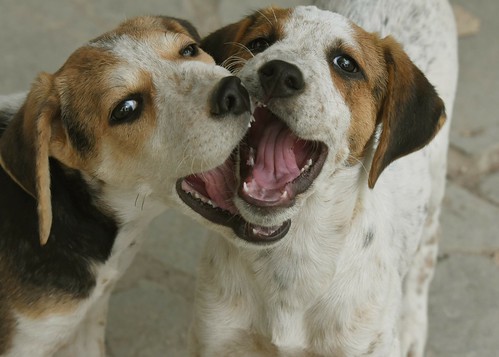
Perhaps I can donate a portion of sales of this photograph to the cause?  These puppies stole my heart at the boat launch in Lake Kerkini.  There were 4 of them, all homeless.

homeless puppies photographed on vacation

the little prince of Cow Bay had to leave his beautiful seaside home

BEYOND, Wildlife

A typical Red Fox has an average life span of 2-4 years in the wild, if they can make it to adulthood.

Late March or early April this spring a local Red Fox couple birthed 5 adorable kits at a local provincial park in Cow Bay.

My friends and I think a Bald Eagle grabbed a kit when they first emerged from the den. Four kits were spotted for a bit after that, although one was clearly not doing well.

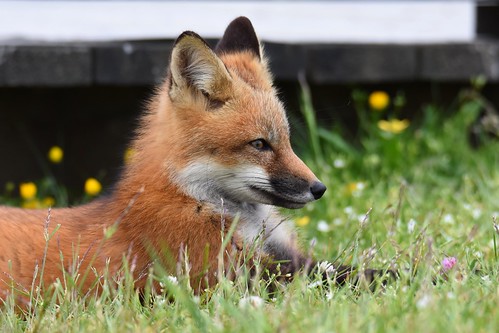
sleepy kit

The mortality rate of Red Fox kits is quite high, but not nearly as high as this local fox family experienced.

On May 9th I saw these 3 fox kits alive. The park had not opened yet.

3 fox kits with momma on May 9th, 2018

It would be typically expected for perhaps 2 to make it to the fall, and after that maybe only 1 to reach adulthood so things appeared to be on track.

But, once the park opened for the season things quickly went downhill.

I’m not sure what the fine is for feeding wildlife, but it matters not at this was not enforced.

It’s safe to say that human intervention caused the death of at least 1 (possibly 2) of the kits.

The park opened on May 18th and right away park visitors started feeding the kits. Within 2 weeks the kits made the local paper.

Momma wasn’t seen much around after that, and I don’t think that is a coincidence. Kits shouldn’t be on their own until about 7 months old, which should be October in this case.

Momma fox

I found a dead kit by in the parking lot by the beach house on June 23 and only one kit was spotted after that. I decided then he was the little prince of Cow Bay.

lazy summer eve

By end of July this our little prince was sitting on picnic tables being fed ice cream and pizza by park visitors.

Surviving all odds, this little fellow was strong and healthy and should have grown up in his beautiful seaside kingdom.

It was amazingly sad for me to witness parents encouraging their children to feed the fox. And here I thought every Canadian knew not to feed wildlife…sigh.

Fox kits need to learn to hunt on their own by 7 months of age or starve to death, so being fed by humans put his life in direct jeopardy.

Instead of thinking about the impact of human intervention on this innocent creature, the concern seemed to be primarily that he may nip someone.

A sad victim of human ignorance, now he lives in a cage at the Shubenacadie Wildlife Park.

Our little prince of Cow Bay no longer free to enjoy his beautiful seaside kingdom.

If you visit him, remember his past and see the difference.

We can learn from our mistakes,

Angela

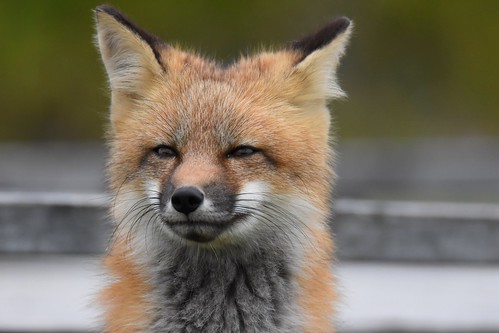
Red Fox kit growing up fast

“I write better in Cape Breton… too many people around in Ontario. Down there I meet all sorts of non-human people, but they don’t bother me, and I don’t feel I have to apologize on behalf of my species quite so often.”
– Farley Mowat

Red Fox don’t have wonderful eyesight, but a great sense of smell and an even better sense of whimsy.  Born near the beach in Nova Scotia, this little feller loves to lay in the fresh grass as you can see by the stain on his chin.